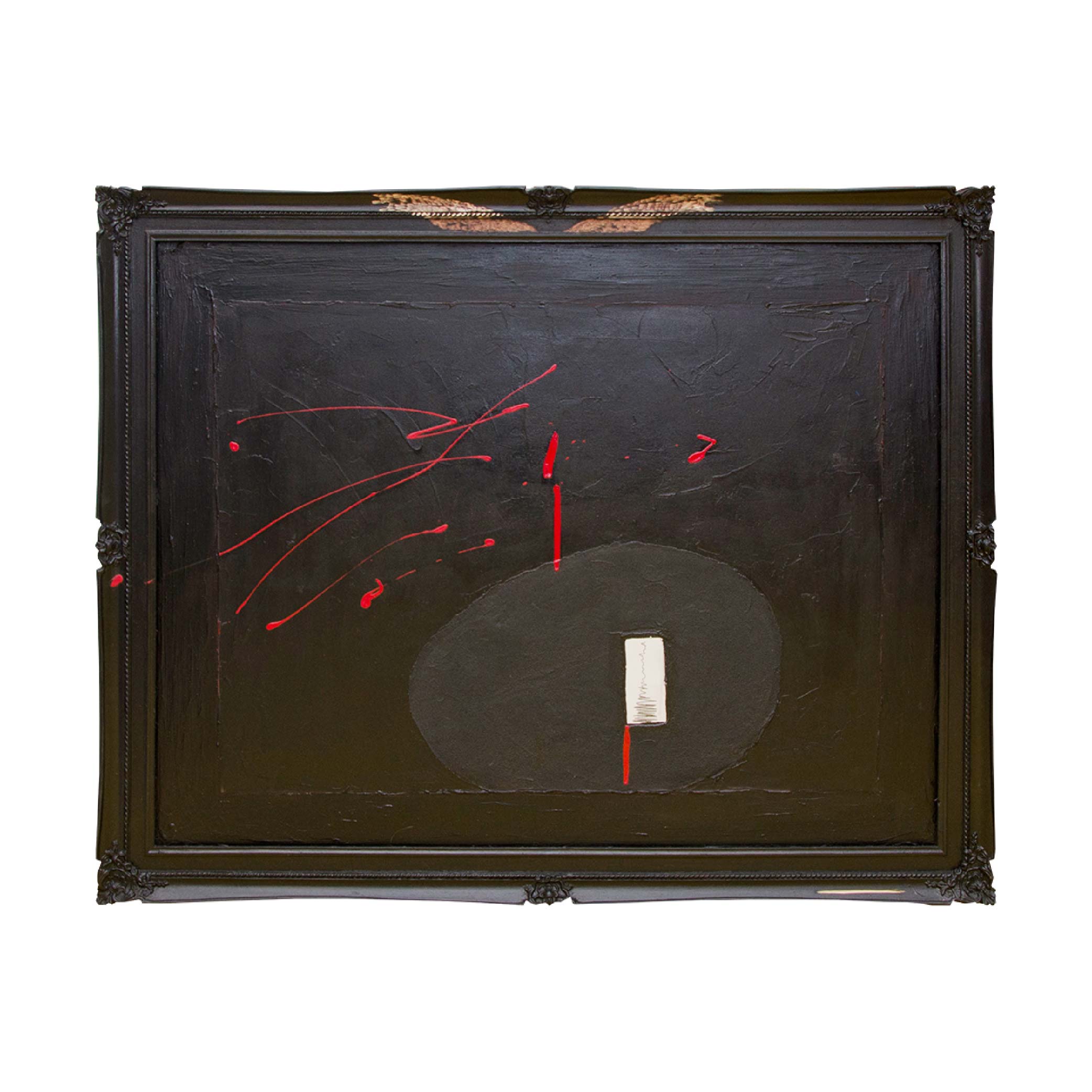
The Therapy period represents a fundamental stage in Ghass’s artistic journey, defined by a raw yet deeply controlled form of expression rooted in personal experience and memory.
For nearly two decades, until 2010, the artist deliberately restricted his palette to three colors: black, red, and white. This radical choice was far from arbitrary. Red evokes skies darkened by bombardments and the violence of conflict, black recalls burned trees and the weight of trauma embedded in memory, while white symbolizes peace, innocence, and the search for inner balance.
Through this reduced palette, Ghass developed a powerful visual language capable of conveying both human suffering and a universal message of reflection and peace.
Art became a therapeutic process — a means of transforming trauma into expression, both for the artist and the viewer. In 2010, following a personal turning point, Ghass gradually expanded his use of color, yet this period remains emblematic of his commitment to exploring human emotion through chromatic restraint, where each color carries profound symbolic intensity.
Art is a universal message of reflection and peace